- Andorra
- United Arab Emirates
- Afghanistan
- Antigua and Barbuda
- Anguilla
- Albania
- Armenia
- Netherlands Antilles
- Angola
- Argentina
- American Samoa
- Austria
- Australia
- Aruba
- Aland Islands
- Azerbaijan
- Bosnia and Herzegovina
- Barbados
- Bangladesh
- Belgium
- Burkina Faso
- Bulgaria
- Bahrain
- Burundi
- Benin
- Saint Barthelemy
- Bermuda
- Brunei
- Bolivia
- Bonaire, Saint Eustatius and Saba
- Brazil
- Bahamas
- Bhutan
- Bouvet Island
- Botswana
- Belarus
- Belize
- Canada
- Cocos Islands
- Democratic Republic of the Congo
- Central African Republic
- Republic of the Congo
- Switzerland
- Ivory Coast
- Cook Islands
- Chile
- Cameroon
- China
- Colombia
- Costa Rica
- Cuba
- Cape Verde
- Curacao
- Christmas Island
- Cyprus
- Czech Republic
- Germany
- Djibouti
- Denmark
- Dominica
- Dominican Republic
- Algeria
- Ecuador
- Estonia
- Egypt
- Western Sahara
- Eritrea
- Spain
- Ethiopia
- Finland
- Fiji
- Falkland Islands
- Micronesia
- Faroe Islands
- France
- Gabon
- Grenada
- Georgia
- French Guiana
- Guernsey
- Ghana
- Gibraltar
- Greenland
- Gambia
- Guinea
- Guadeloupe
- Equatorial Guinea
- Greece
- Guatemala
- Guam
- Guinea-Bissau
- Guyana
- Hong Kong
- Honduras
- Croatia
- Haiti
- Hungary
- Indonesia
- Ireland
- Israel
- Isle of Man
- India
- Iraq
- Iran
- Iceland
- Italy
- Jersey
- Jamaica
- Jordan
- Japan
- Kenya
- Kyrgyzstan
- Cambodia
- Kiribati
- Comoros
- Saint Kitts and Nevis
- North Korea
- South Korea
- Kuwait
- Cayman Islands
- Kazakhstan
- Laos
- Lebanon
- Saint Lucia
- Liechtenstein
- Sri Lanka
- Liberia
- Lesotho
- Lithuania
- Luxembourg
- Latvia
- Libya
- Morocco
- Monaco
- Moldova
- Montenegro
- Saint Martin
- Madagascar
- Marshall Islands
- Macedonia
- Mali
- Myanmar
- Mongolia
- Macao
- Northern Mariana Islands
- Martinique
- Mauritania
- Montserrat
- Malta
- Mauritius
- Maldives
- Malawi
- Mexico
- Malaysia
- Mozambique
- Namibia
- New Caledonia
- Niger
- Norfolk Island
- Nigeria
- Nicaragua
- Netherlands
- Norway
- Nepal
- Nauru
- Niue
- New Zealand
- Oman
- Panama
- Peru
- French Polynesia
- Papua New Guinea
- Philippines
- Pakistan
- Poland
- Saint Pierre and Miquelon
- Pitcairn
- Puerto Rico
- Palestine
- Portugal
- Palau
- Paraguay
- Qatar
- Reunion
- Romania
- Serbia
- Russia
- Rwanda
- Saudi Arabia
- Solomon Islands
- Seychelles
- Sudan
- Sweden
- Singapore
- Saint Helena
- Slovenia
- Slovakia
- Sierra Leone
- San Marino
- Senegal
- Somalia
- Suriname
- South Sudan
- Sao Tome and Principe
- El Salvador
- Sint Maarten
- Syria
- Swaziland
- Turks and Caicos Islands
- Chad
- Togo
- Thailand
- Tajikistan
- Tokelau
- East Timor
- Turkmenistan
- Tunisia
- Tonga
- Turkey
- Trinidad and Tobago
- Tuvalu
- Taiwan
- Tanzania
- Ukraine
- Uganda
- United Kingdom
- United States
- Uruguay
- Uzbekistan
- Vatican
- Saint Vincent and the Grenadines
- Venezuela
- British Virgin Islands
- U.S. Virgin Islands
- Vietnam
- Vanuatu
- Wallis and Futuna
- Samoa
- Kosovo
- Yemen
- Mayotte
- South Africa
- Zambia
- Zimbabwe
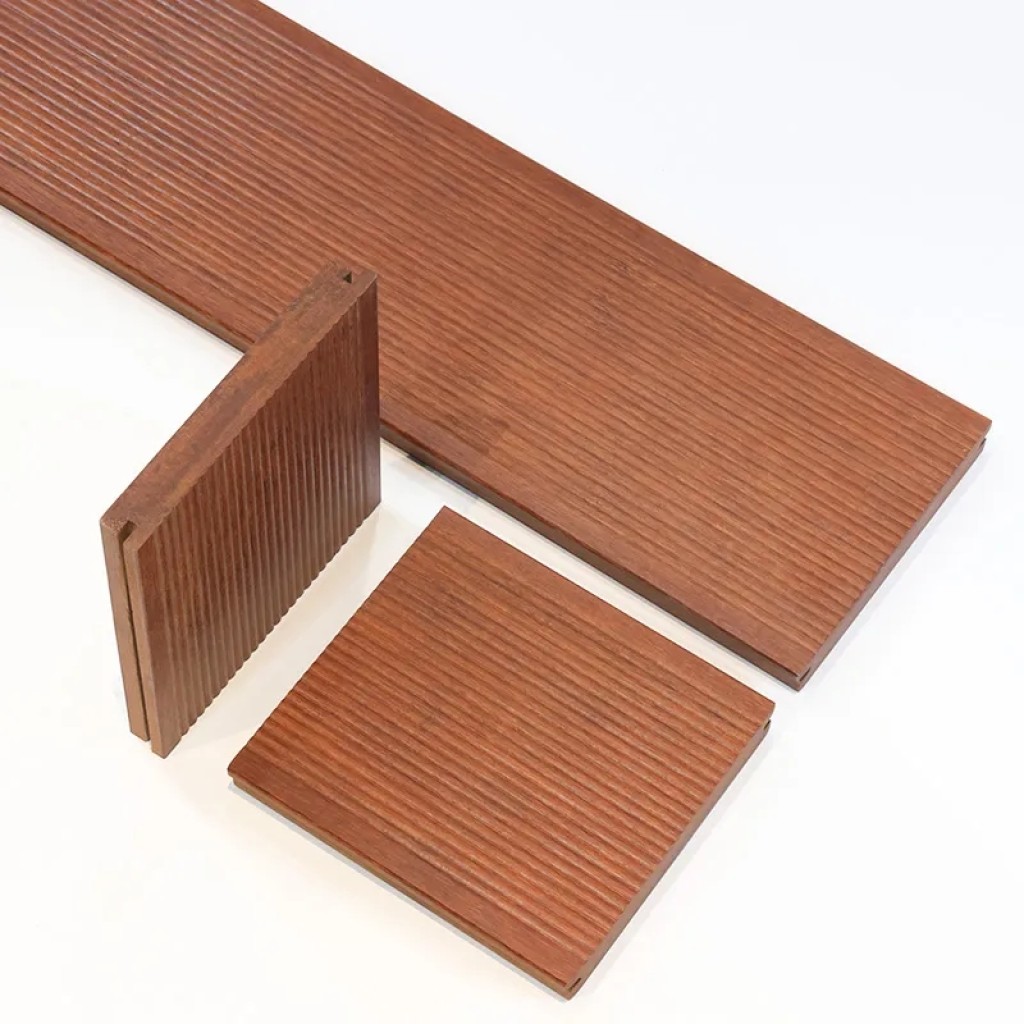
Outdoor Bamboo Decking
Details
Gardena, United States
$360
26, Jan 2026
Additional Details
17322
59
 Condition
New
Description
How Outdoor Bamboo Decking Is Engineered
Raw bamboo cannot be used outdoors without modification. It grows fast, but its natural form lacks the density and moisture resistance needed for long‑term exposure. Outdoor bamboo decking is created through a more sophisticated process that enhances structural strength and stability.
High-Temperature Carbonization and Compression
Manufacturers typically start by splitting bamboo culms into thin strips, removing sugars and starches during a controlled carbonization stage. This step not only changes the color but also reduces the risk of mold and pest activity.
Next, the strips are compressed under high pressure to form dense planks. This compression process can more than double the density of the material compared with many types of hardwood, giving the boards a firmness similar to tropical species like Ipe or Merbau.
Resin Infusion
To further stabilize the bamboo, resin is introduced into the fiber structure. This reinforces the strips, reduces water absorption, and contributes to a higher level of dimensional stability. The resin blend is designed for exterior use, helping boards resist warping and cracking.
Outdoor-Grade Coating
Once formed into planks, the decking receives multiple layers of UV‑resistant coating. This finish protects the material against sunlight, surface moisture, and gradual fading. Some products use factory-applied coatings, while others require finishing on-site after installation.
This engineered structure differs greatly from natural bamboo or indoor bamboo flooring. The result is a material strong enough for harsh outdoor environments.
Resistance to Rain and Moisture
One of the biggest concerns for outdoor decking materials is moisture. Rain, humidity, and morning dew can shorten the life of natural wood and cause problems like rot, swelling, and fungal growth. Bamboo decking performs differently depending on how it is produced and installed.
Moisture Behavior
High‑density bamboo decking absorbs far less water than traditional softwoods. The compression process reduces pore size in the bamboo fibers, and resin infusion fills spaces where water could otherwise penetrate. This gives the boards:
- Lower water absorption
- Reduced swelling
- Greater resistance to decay
- Stronger dimensional stability
These qualities are especially valuable in regions with frequent rain or seasonal humidity.
Mold and Mildew Resistance
Untreated bamboo is vulnerable to mold growth. Engineered bamboo decking, however, is heat‑treated and resin‑stabilized, removing nutrients that mold relies on. When paired with proper surface coatings and adequate ventilation under the deck, it resists mold far better than many natural wood species.
Drainage and Installation
Even with improved moisture performance, proper installation still matters. Gaps between boards, elevated joist structures, and good airflow prevent water from pooling below the deck. Bamboo products respond best when water can drain freely, which reduces stress on the material over time.
Show MoreTags
Location
- Address1846 W. 169th Street, Suite A

Similar Listings